Nearly half of all flight delays in 2022 were airlines' responsibility: Transport Canada
- Air
- 10-10-2023 6:13 am
- Pax Global Media

Pax Global Media
Who was responsible for last year’s flight delays? According to new data from Transport Canada, nearly half of the disruptions in 2022 were deemed the responsibility of an airline.
As reported by CBC News, out of nearly 199,000 delays that occurred last year, just over 87,500 (or 44 per cent) were considered to be within an airline's control and were not due to a safety issue, new information shows.
And of that total number, 28,503 of delays were caused by safety issues, which, over the past year, has emerged as a point of contention.
The conversation around delays and cancellations that are within an airline’s control pertains to Canada’s Air Passenger Protection Regulations (APPR), rules that were introduced in 2019, and the compensation airlines are required to pay passengers for flight disruptions.
READ MORE: Proposed passenger rights overhaul “will not improve” air travel, says NACC
Last year, as air travel ramped up to pre-pandemic levels, passengers who faced delays began accusing airlines of skirting passenger protection rules, using “safety” as a loophole, and denying them the compensation they're owed.
As a result, the Canadian Transportation Agency (CTA) has been grappling with a growing number of passenger complaints, which now tops 57,000 – a new high.
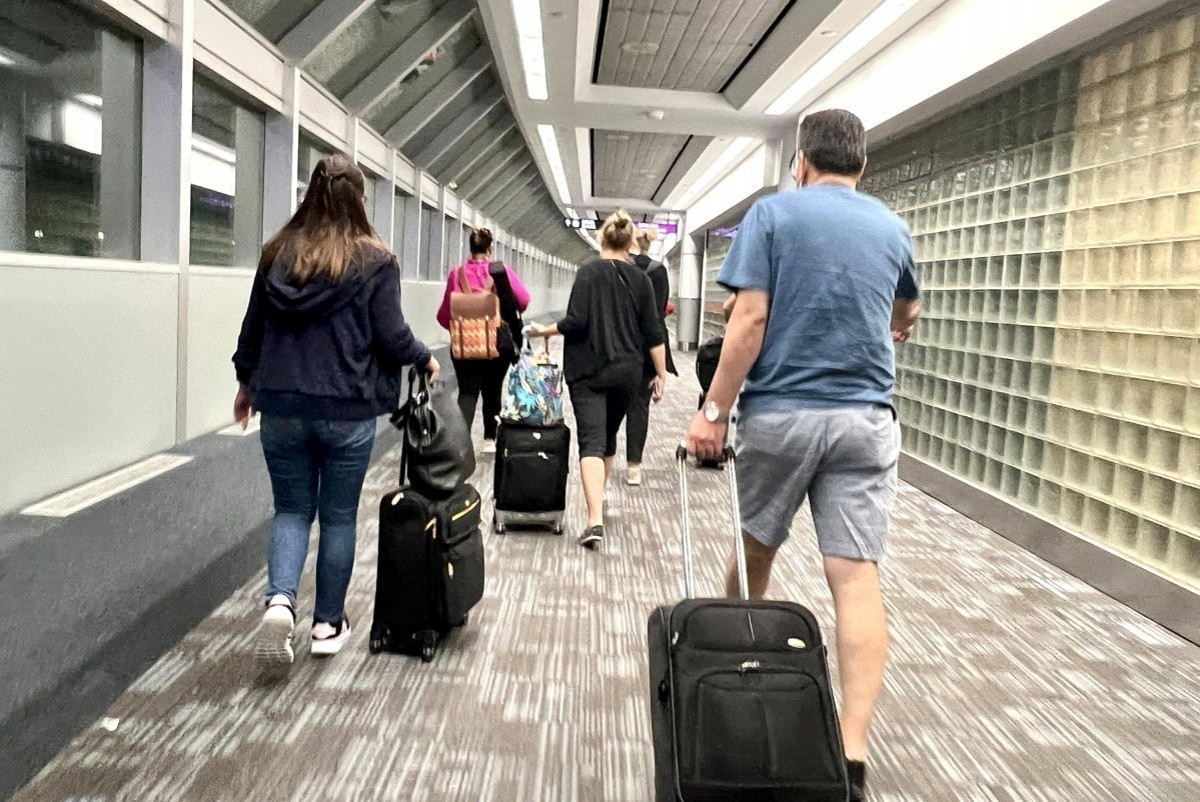
As reported in September, the CTA, on average, faced more than 3,000 complaints per month over the past year – the current number is more than three times the total complaints recorded in September last year.
Right now, the CTA is proposing changes to the rules in an attempt to beef-up measures and tighten “loopholes” to traveller compensation and lead to harsher penalties.
The changes are currently being reviewed by the CTA and aren't expected to come into effect until 2024.
READ MORE: Air passenger complaints hit new high, topping 57,000
If the changes pass, proposed amendments to the Canada Transportation Act, which have been introduced as part of Bill C-47, will put the onus on airlines to show a flight disruption is caused by safety concerns or reasons outside their control, with specific examples to be drawn up by the CTA as a list of exceptions around compensation.
In other words, the burden of proof will be put on airlines – not passengers
Under the current system, a passenger is entitled to between $125 and $1,000 in compensation for a three-hour-plus delay or a cancellation made within 14 days of a scheduled departure unless the disruption is outside the airline's control, such as weather or a safety issue (like mechanical problems).
The amount can vary, depending on the size of the carrier and length of delay.
WestJet's head of external affairs Andy Gibbons told CBC News that Transport Canada's numbers prove that airlines don't use safety as a loophole to deny passengers compensation.
"While we will always prioritize the safety of everyone onboard our aircraft, penalizing safety is a policy proposal that should be rejected by government," Gibbons said in a statement.
Gibbons argued that airlines have stabilized their operations since the pandemic and have had fewer problems this year.
WestJet’s CEO Alexis von Hoensbroech has also argued that airlines should not be the only ones held responsible for delays and cancellations.
von Hoensbroech has previously voiced his support for APPR legislation, but the CEO believes airlines aren’t the only ones to blame for disruptions.
“There's airports, there's navigation, there's security, there's border control, there's ground handlers," von Hoensbroech told media last February, noting that those departments aren’t subject to the same rules and regulations as airlines.
“Whatever happens, it's always the airline, and the airline basically becomes the insurance company for the entire industry,” the CEO said at the time.
“If you want an aviation sector that collectively produces a reliable product for our guests, then there has to be some shared accountability.''
von Hoensbroech took to X, the platform formally known as Twitter, yesterday to comment on (and clarify) Transport Canada's latest data.
"Majority of flight delays (56%) in 2022 were NOT caused by airlines - and I bet this share will be even higher in 2023," the CEO wrote. "We stand up to what we are accountable for, but any system that REALLY improves air travel needs full shared accountability through all parties in the sector, also financially. Time to rethink Air Passenger Protection Rules (#APPR) to develop a system that serves the passengers, effectively improves air travel in #Canada, and prevents unintended consequences!"
Last April, the National Airlines Council of Canada (NACC), which represents Air Canada, Air Transat, Jazz Aviation LP and WestJet, denounced the potential scrapping of safety concerns as an exception to compensation requirements.
Jeff Morrison, president, and CEO of the NACC, said the proposed amendments to the APPR “will not improve the operation of Canada’s air travel system or the travel experience for customers.”
“The best passenger protection regime is a system in which travel disruptions are minimized – nothing in these legislative changes will accomplish that,” Morrison stated at the time.
He said targeted infrastructure funding, re-investment of airport rent, increasing the accountability of third-party service providers, and reduction of costs and fees would “strengthen the system.”
Don't miss a single travel story: subscribe to PAX today! Click here to follow PAX on Facebook.
Porter inaugurates two new Fort Lauderdale routes
11-30-2023 12:06 pm
Air Canada signs up for Airbus' carbon removal initiative
11-30-2023 9:30 am
Porter lands in Fort Myers, serving southwest Florida
11-10-2023 11:17 am
Air Canada: New flights to Stockholm in summer 2024
11-02-2023 10:06 am